Minimalist living has become more than just a trend—it’s a lifestyle choice that brings clarity, calm, and efficiency into everyday life. One of the most impactful places to start is your wardrobe. If opening your closet feels overwhelming or getting dressed takes more time than it should, minimalist wardrobe organization can completely change the way you experience your daily routine.
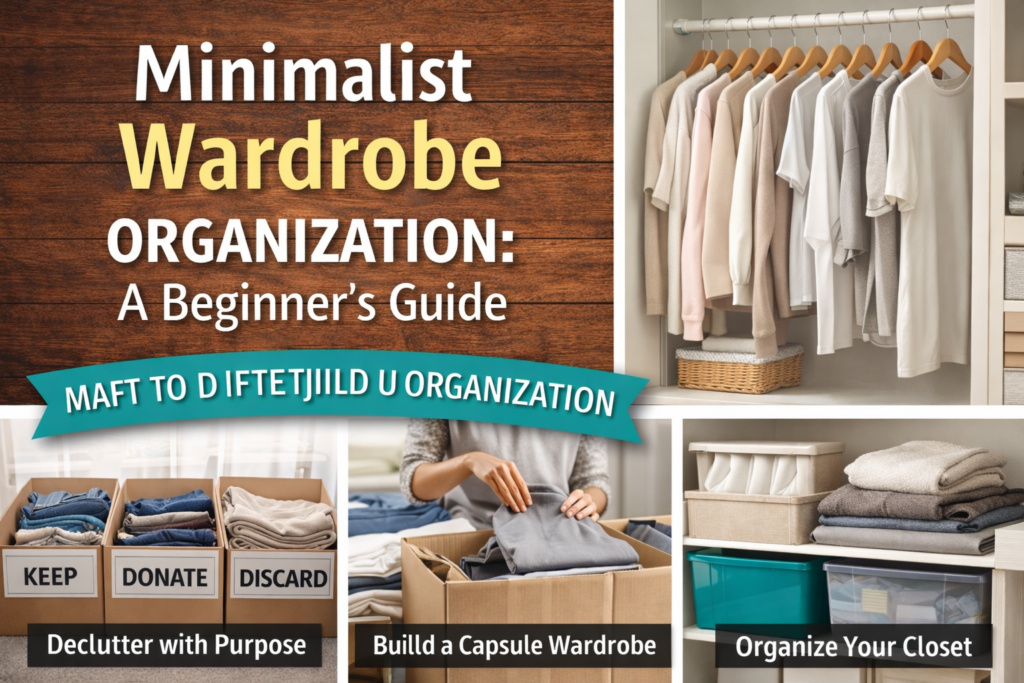
This beginner-friendly guide will walk you step by step through the process of organizing your wardrobe the minimalist way. You’ll learn how to declutter with intention, organize efficiently, build a capsule wardrobe, and maintain a clutter-free closet long term—without stress or perfectionism.
What Is Minimalist Wardrobe Organization?
Minimalist wardrobe organization is the practice of intentionally curating and arranging your clothing so that everything you own serves a purpose, fits your lifestyle, and is easy to access. It’s not about owning the fewest clothes possible—it’s about owning the right clothes and organizing them in a simple, functional way.
Minimalism focuses on:
- Quality over quantity
- Functionality over excess
- Calm visual spaces
- Thoughtful storage
Instead of a crowded closet full of rarely worn items, minimalist wardrobe organization creates a streamlined system where every piece earns its place.
Why Minimalist Wardrobe Organization Matters
An organized wardrobe affects more than just your closet—it impacts your mindset, time, and spending habits.
1. Saves Time Every Day
When your clothes are well organized and curated, choosing an outfit becomes quick and effortless. You immediately see what you own and what works together.
2. Reduces Stress and Decision Fatigue
Too many choices can be overwhelming. Minimalist wardrobe organization reduces visual clutter, helping your mind feel calmer and more focused.
3. Makes Any Space Feel Bigger
A minimalist wardrobe makes even small closets look spacious and clean. Fewer items mean better airflow, visibility, and movement.
4. Encourages Mindful Shopping
Once you experience the benefits of minimalism, you become more intentional about buying new clothes, reducing impulse purchases.
Step 1: Assess Your Current Wardrobe
Before organizing, you need to understand what you’re working with.
Take Everything Out
Remove every item from your closet and drawers. This may feel time-consuming, but it’s essential for effective minimalist wardrobe organization. we have more ideas for small closet organization.
Group Similar Items
Lay clothes out by category—tops, bottoms, dresses, outerwear, shoes, and accessories. This helps you see how much you truly own.
Identify Your Lifestyle Needs
Ask yourself:
- What do I wear most often?
- What suits my daily routine?
- What clothes fit my current lifestyle?
This assessment sets the foundation for intentional organization.
Step 2: Declutter Your Wardrobe Step by Step
Decluttering is the heart of minimalist wardrobe organization. The goal is not perfection—it’s clarity.
Use the Keep, Donate, Discard Method
Go through each item and decide:
- Keep: Fits well, worn often, suits your style
- Donate: Good condition but no longer needed
- Discard: Worn out or damaged
Let Go of “Just in Case” Clothes
If you’re holding onto items for imaginary situations, they’re likely adding clutter. Minimalism encourages living in the present, not the “someday.”
Handle Sentimental Items Mindfully
It’s okay to keep a few sentimental pieces—but limit them and store them separately if they’re not worn regularly.
Decluttering may take time, but it’s a powerful step toward lasting minimalist wardrobe organization.
Step 3: Choose a Minimalist Color Palette
A cohesive color palette makes outfit creation effortless.
Start With Neutrals
Neutral colors like black, white, beige, gray, and navy form the foundation of a minimalist wardrobe.
Add a Few Accent Colors
Choose 2–3 accent colors you love. This keeps your wardrobe visually interesting without creating chaos.
Why Color Matters
When colors coordinate, most items mix and match easily. This reduces the number of clothes you need while increasing outfit options—one of the biggest benefits of minimalist wardrobe organization.
Step 4: Build a Capsule Wardrobe for Beginners
A capsule wardrobe is a small collection of versatile pieces that can be worn in many combinations.
What to Include
While there’s no strict rule, a beginner-friendly capsule wardrobe often includes:
- Everyday tops
- Comfortable bottoms
- Layering pieces
- One or two outerwear items
- Versatile shoes
Focus on Versatility
Each item should work with multiple outfits. This approach supports minimalist wardrobe organization by reducing excess while maximizing functionality.
Avoid Rigid Numbers
Minimalism is personal. Don’t stress about owning an exact number of items—focus on usefulness instead.
Step 5: Organize Clothes the Minimalist Way
Once decluttered, it’s time to organize intentionally.
Use Uniform Hangers
Matching slim hangers save space and create a clean, cohesive look.
Fold Strategically
Fold bulky items like sweaters and jeans to prevent stretching and overcrowding.
Group by Category and Color
Organize clothes by type and then by color. This makes everything easier to find and maintain.
These simple systems are the backbone of minimalist wardrobe organization.
Step 6: Minimalist Storage Solutions That Actually Work
Minimalism doesn’t mean no storage—it means smart storage.
Use Storage Intentionally
Only use bins or boxes if they serve a clear purpose. Avoid buying organizers just to fill space.
Store Seasonal Items Separately
Rotate clothes based on seasons. This keeps your active wardrobe light and relevant.
Avoid Overcrowding
Empty space is part of minimalist design. It allows clothes to breathe and makes your closet visually calm.
Step 7: Minimalist Wardrobe Organization for Small Spaces
Small closets benefit the most from minimalist principles.
Maximize Vertical Space
Use upper shelves for rarely used items and lower shelves for daily wear.
Use Under-Bed Storage Wisely
Store off-season clothes or special-occasion outfits under the bed in labeled containers.
Keep Visible Areas Clear
Minimalist wardrobe organization focuses on reducing visual noise, especially in tight spaces.
Step 8: Maintain a Minimalist Wardrobe Long-Term
Organization is not a one-time project—it’s a habit.
Follow the One-In, One-Out Rule
For every new item you bring in, remove one item you no longer need.
Schedule Regular Check-Ins
Every few months, review your wardrobe to ensure it still fits your lifestyle.
Shop With Intention
Ask yourself:
- Do I already own something similar?
- Will I wear this often?
- Does it fit my color palette?
These habits keep minimalist wardrobe organization sustainable.
Common Mistakes Beginners Should Avoid
Even with good intentions, beginners can make mistakes.
Decluttering Too Fast
Rushing can lead to regret. Take your time and be thoughtful.
Keeping Clothes Out of Guilt
Just because something was expensive doesn’t mean it deserves space.
Overbuying Storage Products
Minimalism prioritizes fewer items, not more containers.
Avoiding these mistakes ensures long-term success with minimalist wardrobe organization.
Minimalist Wardrobe Organization on a Budget
Minimalism doesn’t require expensive tools.
Use What You Already Have
Reuse boxes, baskets, or dividers from around your home.
DIY Simple Solutions
Scarves as drawer liners, boxes as organizers, or repurposed bins work perfectly.
Spend Only When Necessary
If something truly improves function, it’s worth investing in—but avoid unnecessary purchases.
Conclusion: Embrace Minimalist Wardrobe Organization
Minimalist wardrobe organization is not about perfection or restriction—it’s about creating a wardrobe that supports your life instead of complicating it. By decluttering intentionally, organizing thoughtfully, and maintaining mindful habits, you can enjoy a closet that feels calm, functional, and easy to manage.
Start small. Take one step at a time. Over time, minimalist wardrobe organization will not only transform your closet but also simplify your daily routine and mindset.
A clutter-free wardrobe is more than an aesthetic—it’s a form of self-care.






This Post Has One Comment