A Winter Storm Watch is one of the most important weather alerts issued during the cold season, yet it is often misunderstood or ignored. When winter weather begins to threaten large areas with snow, ice, freezing rain, and dangerous temperatures, meteorological agencies issue a Winter Storm Watch to give people time to prepare.
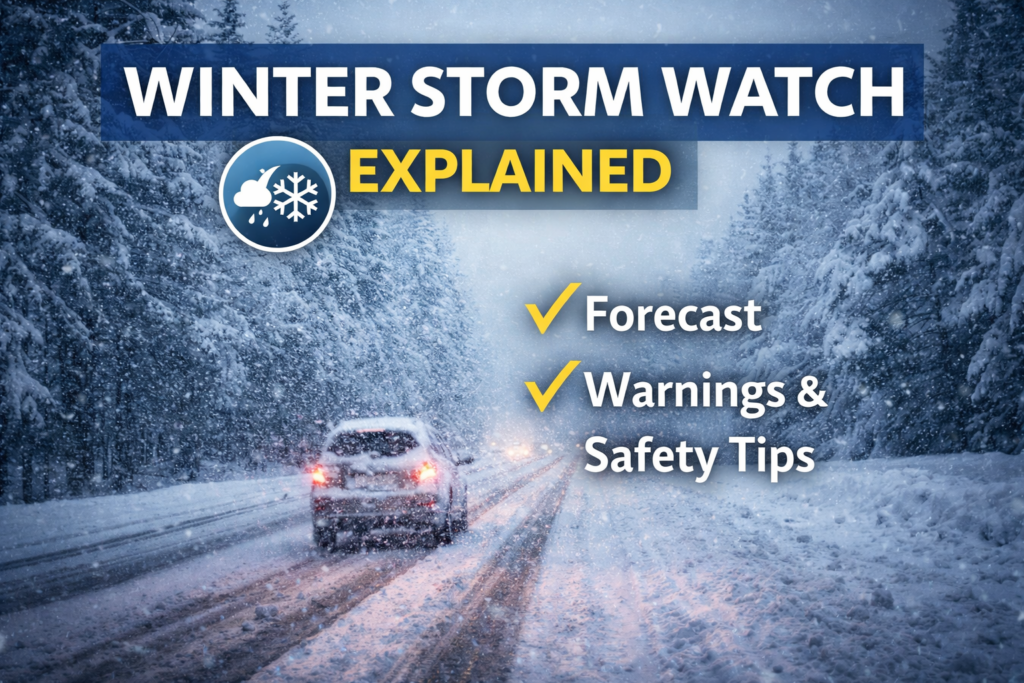
Understanding what a Winter Storm Watch means, how it differs from a warning, and what precautions you should take can help protect lives, homes, and communities. In this comprehensive guide, we explain everything you need to know about a Winter Storm Watch—from forecasting methods to safety tips—so you can stay informed and prepared.
What Is a Winter Storm Watch?
A Winter Storm Watch is an early weather alert issued by meteorological authorities when conditions are favorable for a significant winter storm to develop. This alert usually covers a period of 24 to 72 hours before the potential storm impacts an area.
A Winter Storm Watch does not mean a storm is guaranteed. Instead, it signals that there is a high probability of hazardous winter weather such as:
- Heavy snowfall
- Freezing rain or sleet
- Ice accumulation
- Strong winds and low visibility
The purpose of a Winter Storm Watch is preparation—not panic. It allows individuals, families, businesses, and local authorities to take early steps to reduce risks.
Winter Storm Watch vs Winter Storm Warning: Key Differences
One of the most common questions people ask is the difference between a Winter Storm Watch and a Winter Storm Warning.
Winter Storm Watch
- Conditions are possible
- Issued days in advance
- Focused on preparation and awareness
Winter Storm Warning
- Conditions are expected or already occurring
- Issued closer to the event
- Requires immediate action
In simple terms, a Winter Storm Watch means “Be ready,” while a warning means “Act now.”
How Meteorologists Forecast a Winter Storm
Issuing a Winter Storm Watch involves advanced forecasting techniques and constant monitoring of weather systems.
Key Forecasting Tools
- Satellite imagery to track storm systems
- Radar data to monitor precipitation
- Computer weather models
- Temperature and wind analysis
Meteorologists analyze how cold air, moisture, and atmospheric pressure interact. Small changes in temperature can determine whether precipitation falls as rain, snow, sleet, or ice—making winter forecasting especially challenging.
This is why a Winter Storm Watch can change, be upgraded, or be canceled as new data becomes available.
Areas Most Likely to Be Affected by a Winter Storm Watch
A Winter Storm Watch can be issued for a wide range of regions, depending on weather patterns.
High-Risk Areas
- Northern and Midwest regions
- Mountainous areas
- Inland regions prone to cold air
- Areas near storm tracks
Urban areas may experience transportation disruptions, while rural regions may face isolation due to snow-covered roads. Geography plays a major role in how winter storms develop and impact communities.
Expected Weather Conditions During a Winter Storm Watch
When a Winter Storm Watch is issued, several weather hazards may occur:
Snowfall
- Light to heavy accumulation
- Reduced visibility
- Snowdrifts due to wind
Ice and Freezing Rain
- Dangerous road conditions
- Power line damage
- Tree limb breakage
Wind and Cold
- Strong gusts causing blowing snow
- Wind chill making temperatures feel colder
- Increased risk of frostbite and hypothermia
These conditions can escalate quickly, making early preparation essential.
Travel Risks and Transportation Impacts
Travel is often the most dangerous aspect of a Winter Storm Watch.
Road Hazards
- Slippery and icy surfaces
- Reduced braking ability
- Multi-vehicle accidents
Air and Public Transport
- Flight delays and cancellations
- Train and bus disruptions
- Limited emergency response access
Authorities strongly recommend avoiding unnecessary travel when a Winter Storm Watch is in effect.
Power Outages and Infrastructure Concerns
A Winter Storm Watch often signals a risk of power and infrastructure failures.
Common Issues
- Ice buildup on power lines
- Fallen trees blocking roads
- Communication outages
- Frozen water pipes
Extended power outages can be especially dangerous in freezing temperatures, making backup heating plans essential.
Safety Precautions for Individuals and Families
Preparation is the most effective response to a Winter Storm Watch.
Home Preparation
- Stock non-perishable food and water
- Ensure heating systems work properly
- Insulate exposed pipes
- Charge electronic devices
Emergency Supplies
- Flashlights and batteries
- First-aid kit
- Blankets and warm clothing
- Medications and baby supplies
Family Safety
- Check on elderly or vulnerable individuals
- Bring pets indoors
- Review emergency plans
Safety Tips for Drivers and Travelers
If travel is unavoidable during a Winter Storm Watch, preparation is critical.
Vehicle Preparation
- Full fuel tank
- Winter tires or chains
- Ice scraper and snow shovel
Emergency Car Kit
- Food and water
- Blankets
- Jumper cables
- Phone charger
If stranded, stay inside the vehicle and conserve energy.
School Closures and Work-from-Home Decisions
A Winter Storm Watch often prompts schools and workplaces to prepare for schedule changes.
Schools
- Monitor forecasts closely
- Prepare for delayed openings or closures
- Communicate early with parents
Workplaces
- Encourage remote work if possible
- Adjust schedules for safety
- Ensure employee communication
Being flexible reduces risk and ensures safety.
How to Stay Updated During a Winter Storm Watch
Staying informed is critical once a Winter Storm Watch is issued.
Reliable Information Sources
- Official meteorological agencies
- Weather apps with push alerts
- Local news stations
- Emergency alert systems
Weather conditions can change rapidly, so regular updates are essential.
What to Do When a Winter Storm Watch Becomes a Warning
If a Winter Storm Watch is upgraded to a warning, immediate action is required.
Immediate Steps
- Stay indoors
- Avoid travel
- Complete last-minute preparations
- Follow official safety instructions
At this stage, conditions are expected to be severe and potentially life-threatening.
Common Myths About Winter Storm Watches
Myth 1: A Watch Means the Storm Will Definitely Happen
Reality: A Winter Storm Watch indicates possibility, not certainty.
Myth 2: Watches Aren’t Serious
Reality: Many major winter storms begin with a watch.
Myth 3: Only Snow Matters
Reality: Ice and wind can be more dangerous than snow.
Understanding these myths helps people take the alert seriously.
The Importance of Community Preparedness
A Winter Storm Watch is not just an individual concern—it affects entire communities.
Community Actions
- Local governments prepare road crews
- Utility companies stage repair teams
- Emergency services increase readiness
When communities prepare together, recovery is faster and safer.
Why Early Preparation Saves Lives
History shows that early action during a Winter Storm Watch reduces:
- Traffic fatalities
- Hypothermia cases
- Power outage durations
- Property damage
Preparedness is always safer than last-minute reactions.
Final Thoughts: Be Prepared, Not Panicked
A Winter Storm Watch is a valuable warning tool designed to protect lives and property. It gives people time to prepare, adjust plans, and stay informed before dangerous winter weather arrives.
By understanding what a Winter Storm Watch means and taking it seriously, you can reduce risks, protect your family, and stay safe during severe winter conditions.
you need to update yourself with our website.
Remember: Preparation today prevents emergencies tomorrow.